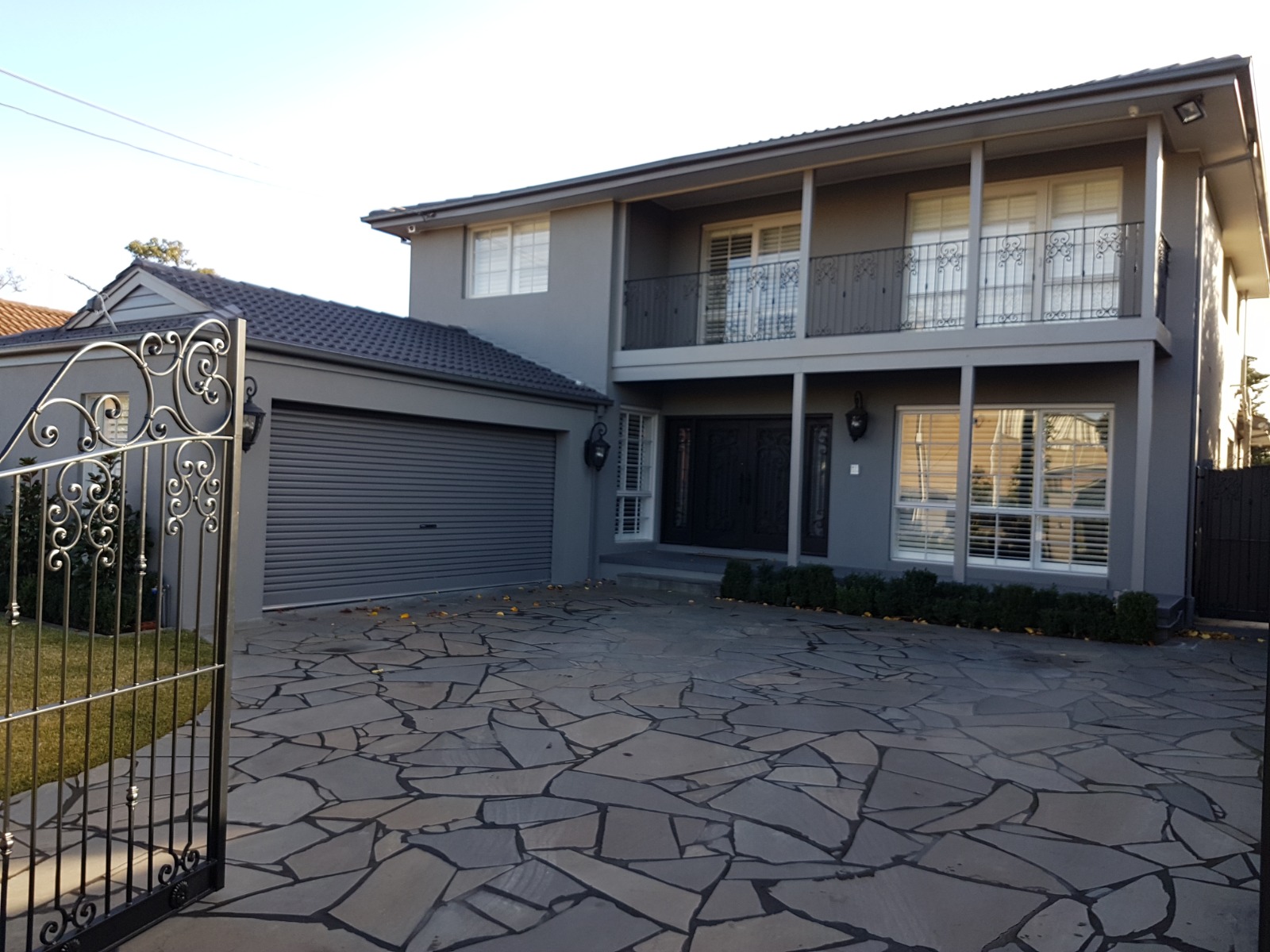
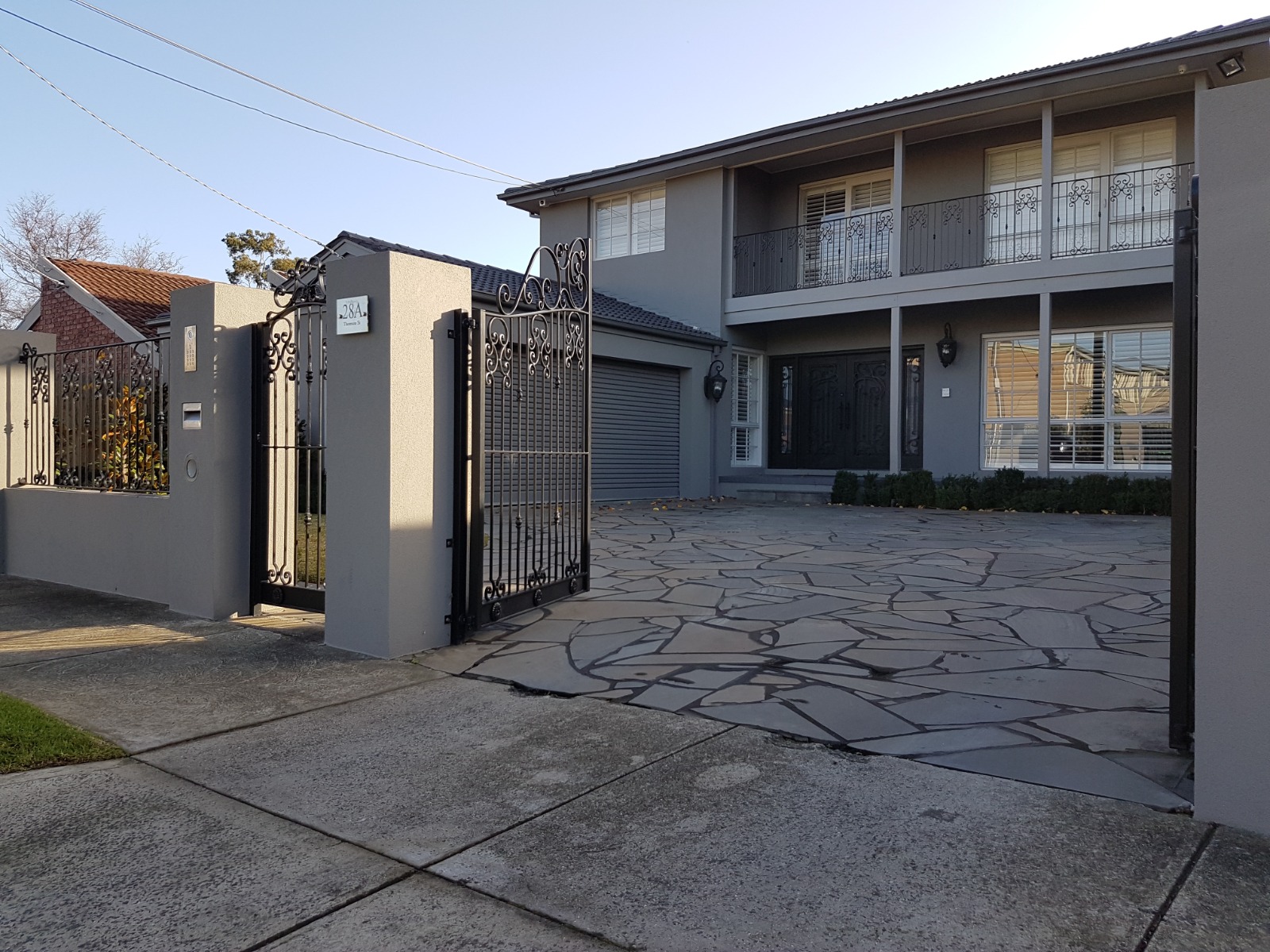
Acrylic render is a polymer-modified coating applied over cement render, blockwork, concrete, Hebel or lightweight cladding. The acrylic content gives the coat elasticity, which is why it copes with the daily expansion and contraction a Melbourne facade goes through between a 6am frost and a 38-degree afternoon.
Because the colour is mixed through the product rather than painted on, a chip does not expose a white substrate and the finish does not peel the way film-forming paint eventually does. It is our default recommendation for new builds, extensions and any facade where the client wants a low-maintenance finish that holds its colour.
We build the system up properly: substrate check, patching and keying, bonding primer where the surface calls for it, base coat, then the finish coat worked to the specified texture. Where the wall needs a genuine weather barrier we finish with a DULUX AcraShield membrane, which carries a 10-year manufacturer guarantee on the coating system.
Best suited to
- New homes, townhouses and extensions
- Blockwork, Hebel, concrete and cladding substrates
- Facades that move — upper storeys, long unbroken walls
- Anyone who wants colour through the coat, not painted on
When we'd steer you elsewhere
- Solid-brick period homes that need to breathe — use lime instead
- Damp walls where the moisture source has not been fixed first
Assessment before action
When acrylic render is the right system
Appropriate applications
- New masonry, Hebel and properly detailed lightweight facades that need a flexible finish
- Extensions where a modern texture and consistent colour must tie old and new elevations together
- Exposed upper storeys and long walls subject to daily thermal movement
What commonly causes failure
- Coating over chalky paint, dust or a surface with uneven suction
- Omitting mesh at substrate changes, openings and other stress points
- Bridging movement joints or applying in heat and wind without controlling the wet edge
- Water entering through parapets, flashings, sealant joints or ground-level damp
Signs the wall needs attention
- Hairline cracks repeating above window corners or along panel joints
- Bubbling, soft patches or staining after rain
- A hollow sound where the base coat has released from the substrate
- Faded, powdery or uneven colour on highly exposed elevations
Photos are useful for a first look, but bond, moisture and movement need to be assessed at the wall. If you can see one of these signs, send close-up and full-elevation photos with your quote request so we can advise whether an inspection is the next step.
Repair or replacement
Keep sound work. Replace failed work.
Repair makes sense when
Local cracking or impact damage can usually be opened, reinforced, rebuilt and blended before the elevation is recoated.
Replacement is safer when
Widespread debonding, trapped moisture or failure of the underlying cladding system calls for removal back to a sound substrate.
| Option | Best suited to | Main consideration |
|---|---|---|
| Acrylic finish | Movement-prone or exposed facades | Flexible and pre-coloured; needs a compatible prepared base |
| Painted cement render | Stable masonry and traditional flat work | Hard base, but paint becomes the maintenance layer |
| Lime render | Breathable solid-brick heritage walls | Softer and vapour-open; not a substitute for modern acrylic systems |
How we do it
The acrylic render process
Substrate assessment
We sound the wall for drummy sections and check for movement cracks, salt damp and any existing coating that will not hold a bond.
Preparation
Old coatings stripped or keyed, patches made good, windows and edges masked, control joints identified and respected.
Base coat
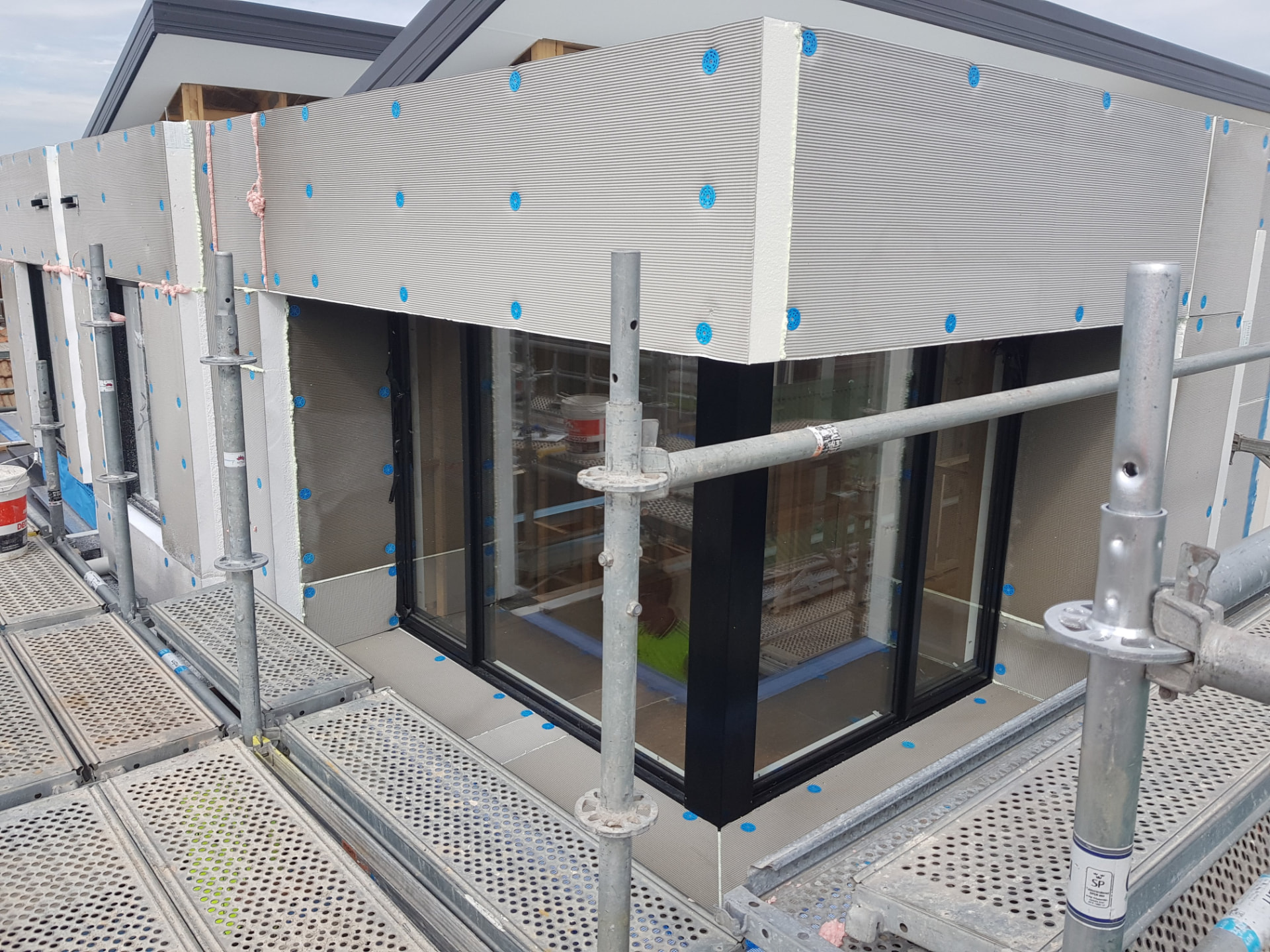
Polymer-modified base applied and levelled, with mesh reinforcement over substrate changes and stress points.
Finish coat
Pre-coloured acrylic worked to the agreed texture — fine sand, sponge, rollcoat or trowelled — in a continuous run so there are no join lines.
Membrane and handover
Optional AcraShield membrane, site cleaned, and a walk-around in raking light before we call it finished.
Technical detail
Materials, application and curing
Materials in the system
A compatible bonding primer, polymer-modified base render, alkali-resistant fibreglass mesh, corner beads, pre-coloured acrylic texture and, where specified, an elastomeric membrane such as Dulux AcraShield.
Application method
Base coats are ruled and reinforced where movement concentrates. The finish is then applied continuously from natural break to natural break by trowel, roller or sponge, depending on the selected profile.
Curing and protection
Acrylic products dry by water evaporation and film formation rather than cement hydration alone. We protect fresh work from rain, frost, hot winds and direct summer heat, and follow the stated recoat window for the selected system.
Colour and texture matching
Existing colour is assessed on a clean, unfaded area, then checked with a site sample. On older walls, recoating the full elevation is usually the only way to avoid a visible patch because weathering changes both colour and sheen.
Lifespan and maintenance
A sound, correctly detailed acrylic system commonly provides 15–25 years of service before a maintenance recoat is considered; exposure, moisture management and building movement have more influence than colour choice.
Practical care
- Wash airborne dirt and cobwebs with low pressure
- Inspect sealants, cappings and penetrations every year
- Repair impact chips before water reaches the base coat
- Avoid pressure washing close to the textured surface
Warranty information
Approved coating systems may qualify for a manufacturer-backed 10-year coating guarantee when the complete specification, preparation and application conditions are met. Eligibility and the workmanship scope are recorded in the written quote; substrate movement, leaks and third-party damage are separate building issues.
A site-specific written quote is the source of truth for product, preparation, access, finish, exclusions and the warranty offered on your project.
Request a written quoteBuilt for local conditions
Melbourne walls are not all the same
Melbourne facades can move from cold, damp mornings to strong afternoon sun in a few hours. North- and west-facing walls usually weather fastest, while shaded south elevations need closer attention to moisture and organic growth.
View Melbourne service areasWorkmanship you can check
- Substrate and moisture condition checked before product selection
- Control joints and natural break lines kept functional
- Compatible products kept within one specified coating system
- Written scope identifies preparation, finish and warranty conditions
With more than 20 years in the trade, we explain the substrate, proposed build-up and likely limitations before work starts—not after a crack or colour variation appears.
Common questions
Acrylic render questions
Can you apply acrylic render over painted brick?
Usually yes, but only after we test the existing paint for adhesion. If the paint is flaking or was applied over a chalky surface, it comes off first — otherwise the new render is only as strong as the paint underneath it.
How long does acrylic render last?
A correctly prepped acrylic system on a sound substrate will hold up for 15–25 years before it wants a recoat. Failures almost always trace back to preparation or moisture, not the product.
Will acrylic render crack?
Hairline cracking follows the building, not the coating. Acrylic is the most crack-tolerant render we apply, and we mesh over stress points and honour existing control joints to keep movement where it belongs.
Can acrylic render be repaired without doing the whole house?
Yes, when failure is local. The structural repair can be confined to the damaged area, although we often recommend recoating to the nearest corner or control joint so the colour and texture read evenly.
Is acrylic render waterproof?
It is weather-resistant, not a cure for building leaks. Flashings, parapet cappings, windows, sealants and drainage still need to keep bulk water out of the wall assembly.
Other systems we apply
Sand & Cement Rendering
The traditional mix, built up in stages, keyed properly and floated dead flat.
Texture Coating & Stucco
Rollcoat, sponge, fine sand and rough cast — matched off an existing wall so the join disappears.
Hebel, Foam & Lightweight Cladding Render
Render systems specified for Hebel, polystyrene and lightweight cladding substrates — where the coating is part of the wall system, not a finish on top of it.
Related repair services
Working out a budget? See our Melbourne rendering cost guide, or find your suburb.
Get a quote for acrylic render
Send through the details and a couple of photos and we will book a site visit and come back with a written itemised quote.